Today's
EarthStation1.com 15% Off Commemorative Memorial Title: Gimme That
Old Time Christmas! Holiday Films DVD, MP4 Download, USB
Today, December 6, 2025 
December 6: Saint Nicholas Day (The Feast
Of Saint Nicholas): -- An annual recognition celebrated on the
anniversary of the death of the third-century saint who became an
inspiration for the modern-day Santa Claus. St. Nicholas is known
for selling all his possessions and giving his money to the poor.
It isobserved on December 6 in Western Christian countries or on
December 5 in others, and on December 19 in Eastern Christian
countries using the old church Calendar, it is the feast day of
Saint Nicholas of Myra, falling within the season of Advent. It is
celebrated as a Christian festival with particular regard to Saint
Nicholas' reputation as a bringer of gifts, as well as through the
attendance of church services. Raised as a devout Christian, Saint
Nicholas dedicated his whole life to serving the sick and
suffering. Legendary stories about St. Nicholas later become part
of the inspiration for the modern-day Santa Claus. For example,
during the third century, a daughter's chances of marriage
increased when her father offered a large dowry to prospective
husbands. One story tells of a poor father with three daughters.
He had no dowry to offer. Traditionally, families left their shoes
by the fires at night so that they could dry. On three separate
occasions, Ol' St. Nicholas provided a dowry for each girl. Legend
says he made gold appear in their shoes, drying by the fire. While
St. Nicholas Day is not to be confused with Christmas, some
similarities do exist. Traditions include leaving gifts in shoes
(or stockings) or the exchange of small gifts. Another tradition
suggests leaving treats for good boys and girls. However, the
naughty ones receive a twig or chunk of coal. Saint Nicholas is
the patron saint of a great many causes. Some of the causes
include sailors, travelers, clergy, school children, and thieves,
to name a few. He was born in the village of Patar, Turkey on
March 15, 270 AD, located on the southeastern coast of modern-day
Turkey. Buried in a tomb in Myra, Turkey, water believed to have
healing powers formed in his grave; it is called the Manna of
Saint Nicholas. In the European countries of Germany and Poland,
boys have traditionally dressed as bishops and begged alms for the
poor. In Poland and Ukraine children wait for St. Nicholas to come
and to put a present under their pillows provided that the
children were good during the year. Children who behaved badly may
expect to find a twig or a piece of coal under their pillows. In
the Netherlands and Belgium children put out a shoe filled with
hay and a carrot for Saint Nicholas' horse. On Saint Nicholas Day,
gifts are tagged with personal humorous rhymes written by the
sender. In the United States, one custom associated with Saint
Nicholas Day is children leaving their shoes in the foyer on Saint
Nicholas Eve in hope that Saint Nicholas will place some coins on
the soles. The American Santa Claus, as well as the British Father
Christmas, derive from Saint Nicholas. "Santa Claus" is
itself derived in part from the Dutch Sinterklaas, the saint's
name in that language. However, the gift giving associated with
these descendant figures is associated with Christmas Day rather
than Saint Nicholas Day itself. To observe Saint Nicholas Day:
Incorporate some Saint Nicholas Day traditions into your holiday
season! Slip a gift or surprise into someone's shoe. It doesn't
have to be anything elaborate. You could leave a special note or a
small wrapped piece of chocolate. Leave a coin or an ornament for
the tree. Tuck a stress ball or a new pair of socks into a loved
one's pair of shoes. A fun air freshener or small bath bomb are
two more fun gifts to sneak into a pair of shoes. Share the story
of St. Nicholas - and use #StNicholasDay #SaintNicholasDay and
#FeastOfSaintNicholas to post on social media! On Sale @ 15% Off
Discount Till Midnight PT!
https://store.earthstation1.com/gimme-that-old-time-christmas-classic-yuletide-holiday-films-dvd.html
Today's
EarthStation1.com 15% Off Commemorative Memorial Title: Monarchy
In The UK: British Royal History MP4 Video Download DVD Set
Today, December 6, 2025 
December 6, 1421: #BOTD: #HBD! Henry VI
Of England, King Of England from 1422 to 1461 and again from 1470
to 1471, and disputed King Of France from 1422 to 1453, informally
regarded as a saint and martyr to whom miracles were attributed
after his death until the 16th century, subject of a trilogy of
plays by William Shakespeare (d. May 21, 1471) is #born Henry
Lancaster in Windsor Castle, Berkshire, England. Henry VI became
King Of England at the age of nine months after his father King
Henry V died of dysentery at his fortress home, The Chateau de
Vincennes, next to the town of Vincennes, on the eastern edge of
Paris, France, alongside what is now the Bois de Vincennes public
park. The only child of Henry V, Henry VI succeeded to the French
throne on the death of his maternal grandfather, Charles VI,
shortly afterward becoming King Of England. Henry inherited the
Hundred Years' War (1337-1453), in which his uncle Charles VII
contested his claim to the French throne. He is the only English
monarch to have been also crowned King Of France, in 1431. His
early reign, when several people were ruling for him, saw the
pinnacle of English power in France, but subsequent military,
diplomatic, and economic problems had seriously endangered the
English cause by the time Henry was declared fit to rule in 1437.
He found his realm in a difficult position, faced with setbacks in
France and divisions among the nobility at home. Unlike his
father, Henry is described as timid, shy, passive,
well-intentioned and averse to warfare and violence; he was also
at times mentally unstable. His ineffective reign saw the gradual
loss of the English lands in France. Partially in the hope of
achieving peace, in 1445 Henry married Charles VII's niece, the
ambitious and strong-willed Margaret of Anjou. The peace policy
failed, leading to the murder of one of Henry's key advisers,
William de la Pole, 1st Duke of Suffolk, and the war recommenced,
with France taking the upper hand; by 1453, Calais was Henry's
only remaining territory on the continent. As the situation in
France worsened, there was a related increase in political
instability in England. With Henry effectively unfit to rule,
power was exercised by quarrelsome nobles, while factions and
favourites encouraged the rise of disorder in the country.
Regional magnates and soldiers returning from France formed and
maintained increasing numbers of private armed retainers, with
whom they fought one another, terrorised their neighbours,
paralysed the courts, and dominated the government. Queen Margaret
did not remain nonpartisan and took advantage of the situation to
make herself an effective power behind the throne. Amid military
disasters in France and a collapse of law and order in England,
the Queen and her clique came under accusations, especially from
Henry VI's increasingly popular cousin Richard, Duke of York, of
misconduct of the war in France and misrule of the country.
Starting in 1453, Henry had a series of mental breakdowns, and
tensions mounted between Margaret and Richard of York over control
of the incapacitated King's government and over the question of
succession to the English throne. Civil war broke out in 1455,
leading to a long period of dynastic conflict now known as the
Wars of the Roses. Henry was deposed on 4 March 1461 by Richard's
son, who took the throne as Edward IV. Despite Margaret continuing
to lead a resistance to Edward, Henry was captured by Edward's
forces in 1465 and imprisoned in the Tower of London. Henry was
restored to the throne in 1470 but Edward retook power in 1471,
killing Henry's only son and heir-apparent, Edward of Westminster,
in battle and imprisoning Henry once again. Having "lost his
wits, his two kingdoms and his only son", Henry died during
the night in The Wakefield Tower in The Tower Of London, possibly
killed on the orders of King Edward IV, having "lost his
wits, his two kingdoms and his only son" in the words of The
Warkworth's Chronicle, now styled "Warkworth's"
Chronicle, formerly ascribed to John Warkworth, a Master of
Peterhouse, Cambridge. He was buried at Chertsey Abbey, a
Benedictine monastery located at Chertsey in the English county of
Surrey, then reburied in 1484 at St. George's Chapel, Windsor
Castle in Windsor, Berkshire, England. Henry VI left a legacy of
educational institutions, having founded Eton College, King's
College, Cambridge, and (together with Henry Chichele) All Souls
College, Oxford. Shakespeare wrote a trilogy of plays about his
life, depicting him as weak-willed and easily influenced by his
wife, Margaret. On Sale @ 15% Off Discount Till Midnight PT!
https://store.earthstation1.com/monarchy-in-the-uk-british-royal-history-mp4-video-download-dvd-set.html
Today's
EarthStation1.com 15% Off Commemorative Memorial Title: The Gray
Ghost: John Singleton Mosby Civil War MP4 Video Download DVD
Today, December 6, 2025 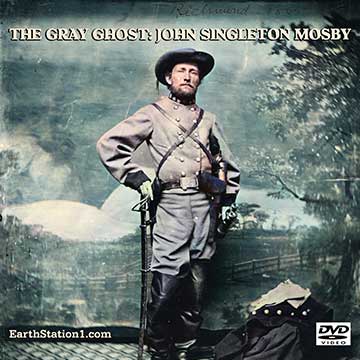
December 6, 1833: #BOTD: John S. Mosby,
also known by "The Gray Ghost", Confederate army cavalry
battalion commander in the American Civil War (d. May 30, 1916) is
#born John Singleton Mosby in Powhatan County, Virginia. His
command, the 43rd Battalion, Virginia Cavalry, was able to elude
their Union Army pursuers and disappear by blending in with local
farmers and townsmen in an area of northern central Virginia in
which Mosby operated with impunity, an area which became known as
"Mosby's Confederacy". Mosby spoke out against
secession, but reluctantly joined the Confederate army as a
private at the outbreak of the war. He first served in William
"Grumble" Jones's Washington Mounted Rifles. Jones
became a Major and was instructed to form a more collective
"Virginia Volunteers", which he created with two mounted
companies and eight companies of infantry and riflemen, including
the Washington Mounted Rifles. Mosby thought the Virginia
Volunteers lacked congeniality, and he wrote to the governor
requesting to be transferred. However, his request was not
granted. The Virginia Volunteers participated in the First Battle
of Bull Run (First Manassas) in July 1861. In April 1862, the
Confederate Congress passed the Partisan Ranger Act which
"provides that such partisan rangers, after being regularly
received into service, shall be entitled to the same pay, rations,
and quarters, during their term of service, and be subject to the
same regulations, as other soldiers." By June 1862, Mosby was
scouting for J.E.B. Stuart during the Peninsular Campaign,
including supporting Stuart's "Ride Around McClellan",
which Mosby himself had first espied, communicated to his
superiors and offered the strategy used by Stuart to succeed.
Mosby was captured on July 20 by Union cavalry while waiting for a
train at the Beaverdam Depot in Hanover County, Virginia. Mosby
was imprisoned in the Old Capitol Prison in Washington, D.C. for
ten days before being exchanged as part of the war's first
prisoner exchange. Even as a prisoner Mosby spied on his enemy.
During a brief stopover at Fort Monroe he detected an unusual
buildup of shipping in Hampton Roads and learned they were
carrying thousands of troops under Ambrose Burnside from North
Carolina on their way to reinforce John Pope in the Northern
Virginia Campaign. When he was released, Mosby walked to the army
headquarters outside Richmond and personally related his findings
to Robert E. Lee. After The Battle Of Fredericksburg, in December,
1862, Mosby and his senior officer J.E.B. Stuart led raids behind
Union lines in Prince William, Fairfax and Loudoun counties,
seeking to disrupt federal communications and supplies between
Washington D.C. and Fredericksburg, as well as provision their own
forces. As the year ended, at Oakham Farm in Loudoun County,
Virginia Mosby gathered with various horsemen from Middleburg,
Virginia who decided to form what became known as Mosby's Rangers.
In January 1863, Stuart, with Lee's concurrence, authorized Mosby
to form and take command of the 43rd Battalion Virginia Cavalry.
This was later expanded into Mosby's Command, a regimental-sized
unit of partisan rangers operating in Northern Virginia. The 43rd
Battalion operated officially as a unit of The Army Of Northern
Virginia, subject to the commands of Lee and Stuart, but its men
(1,900 of whom served from January 1863 through April 1865) lived
outside of the norms of regular army cavalrymen. The Confederate
government certified special rules to govern the conduct of
partisan rangers. These included sharing in the disposition of
spoils of war. They had no camp duties and lived scattered among
the civilian population. Mosby required proof from any volunteer
that he had not deserted from the regular service, and only about
10% of his men had served previously in the Confederate Army. The
partisan rangers proved controversial among Confederate army
regulars, who thought they encouraged desertion as well as morale
problems in the countryside as potential soldiers would favor
sleeping in their own (or friendly) beds and capturing booty to
the hardships and privations of traditional military campaigns.
Mosby was thus enrolled in the Provisional Army of the Confederate
States and soon promoted to lieutenant colonel on January 21,
1864, and to colonel, December 7, 1864. Mosby carefully screened
potential recruits, and required each to bring his own horse.
Several weeks after General Robert E. Lee's surrender, Mosby's
status was uncertain. Finally, on April 21, 1865, in Salem,
Virginia, Mosby, rather than surrender, disbanded the rangers, and
on the following day many former rangers rode their worst horses
to Winchester to surrender, receive paroles and return to their
homes. Mosby himself surrendered on June 17, one of the last
Confederate officers to do so. After the war, Mosby became a
Republican and worked as an attorney, supporting his former enemy,
U.S. President Ulysses S. Grant. He also served as the American
consul to Hong Kong and in the U.S. Department Of Justice. John
Singleton Mosby died of complications after throat surgery in a
Washington, D.C. hospital aged 82, noting at the end that it was
Memorial Day. He is buried at the Warrenton Cemetery in Warrenton,
Virginia. On Sale @ 15% Off Discount Till Midnight PT!
https://store.earthstation1.com/the-gray-ghost-john-singleton-mosby-civil-war-mp4-video-download-dv4.html
Today's
EarthStation1.com 15% Off Commemorative Memorial Title: Sold Down
The River: Black Freedom Lost After Civil War DVD, MP4, USB
Today, December 6, 2025 
December 6, 1865: The Reconstruction Era
(Reconstruction): The Constitution Of The United States: The
Reconstruction Amendments: Slavery In The United States: The End
Of Slavery In The United States: The Thirteenth Amendment To The
United States Constitution (Amendment XIII): -- The Thirteenth
Amendment to the Constitution is ratified, abolishing slavery in
the U.S.. The Thirteenth Amendment (Amendment XIII) to the United
States Constitution abolished slavery and involuntary servitude,
except as punishment for a crime (punishment called Penal Labor).
In Congress, it was passed by the Senate on April 8, 1864, and by
the House on January 31, 1865. The amendment was ratified by the
required number of states on December 6, 1865 when Georgia
ratified the amendment. On December 18, 1865, Secretary Of State
William H. Seward proclaimed its adoption. It was the first of the
three Reconstruction Amendments adopted following the American
Civil War. On Sale @ 15% Off Discount Till Midnight PT!
https://store.earthstation1.com/sold-down-the-river-black-liberty39s-loss-after-civil-war-dvd-mp4-394.html
Today's
EarthStation1.com 15% Off Commemorative Memorial Title:
Washington, D.C. History Video Set DVD, MP4 Download, USB Flash
Drive
Today, December 6, 2025 
December 6, 1884: National Monuments:
National Monuments Of The United States: The Washington Monument:
-- The Washington Monument in Washington, D.C. is completed. It is
an obelisk (a tall, four-sided, narrow tapering monument which
ends in a pyramid-like shape or pyramidion at the top) on the
National Mall in Washington, D.C., built to commemorate George
Washington, once Commander-In-Chief of the Continental Army and
the first President of the United States. Located almost due east
of the Reflecting Pool and the Lincoln Memorial, the monument,
made of marble, granite, and bluestone gneiss, is both the world's
tallest stone structure and the world's tallest obelisk, standing
554 feet 7 11/32 inches (169.046 m) tall according to the National
Geodetic Survey (measured 2013-14) or 555 feet 5 1/8 inches
(169.294 m) tall according to the National Park Service (measured
1884). It is the tallest monumental column in the world if all are
measured above their pedestrian entrances. Construction of the
monument began in 1848, and was halted from 1854 to 1877 due to a
lack of funds, a struggle for control over the Washington National
Monument Society, and the intervention of the American Civil War.
Although the stone structure was completed in 1884, internal
ironwork, the knoll, and other finishing touches were not
completed until 1888. A difference in shading of the marble,
visible approximately 150 feet (46 m) or 27% up, shows where
construction was halted and later resumed with marble from a
different source. The original design was by Robert Mills, but he
did not include his proposed colonnade due to a lack of funds,
proceeding only with a bare obelisk. Despite many proposals to
embellish the obelisk, only its original flat top was altered to a
pointed marble pyramidion, in 1884. The cornerstone was laid on
July 4, 1848; the first stone was laid atop the unfinished stump
on August 7, 1880; the capstone was set on December 6, 1884; the
completed monument was dedicated on February 21, 1885; and
officially opened October 9, 1888. Upon completion, it became the
world's tallest structure, a title previously held by the Cologne
Cathedral. The monument held this designation until 1889, when the
Eiffel Tower was completed in Paris, France. The monument was
damaged during the 2011 Virginia earthquake and Hurricane Irene in
the same year and remained closed to the public while the
structure was assessed and repaired. After 32 months of repairs,
the National Park Service and the Trust for the National Mall
reopened the Washington Monument to visitors on May 12, 2014. The
monument was closed again in September 2016 due to reliability
issues with the elevator system. On December 2, 2016, the National
Park Service announced that the monument would be closed until
2019 in order to modernize the elevator. The 2-3M USD project will
correct the elevator's ongoing mechanical, electrical and computer
issues, which have shuttered the monument since August 17. The
National Park Service has also requested funding in its FY 2017
President's Budget Request to construct a permanent screening
facility for the Washington Monument. On Sale @ 15% Off Discount
Till Midnight PT!
https://store.earthstation1.com/washington-dc-history-videos-dvd-mp4-download-usb-driv4.html
Today's
EarthStation1.com 15% Off Commemorative Memorial Title: The Golden
Age Of Second Avenue DVD, MP4 Video Download, Flash Drive
Today, December 6, 2025 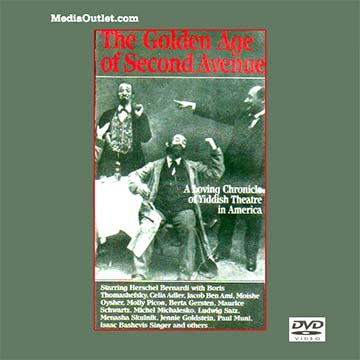
December 6, 1889: #BOTD: #HBD! Celia
Adler, Yiddish American actress, known as "The First Lady Of
The Yiddish Theatre" (d. January 31, 1979) is #born Tzirele
Adler to Jacob Adler and Dinah Shtettin, both actors in the
Yiddish theater. From a young age, she was referred to as Celia.
She was the half-sister of Stella Adler, Luther Adler, and Jacob
Adler's five other children. Unlike Stella and Luther, who became
well known for their work with the Group Theater and their film
work and as theorists of the craft of acting, she was almost
exclusively a stage actress. Celia's mother, Dinah Shtettin, was
the second wife of Jacob Adler, whose first wife had died. The
couple had met and married in London, and they arrived in the
United States from there shortly before Celia's birth. They
divorced when Celia was a young child when Adler eloped with Sara
Heine, although they continued to work together in the theater.
Shtettin subsequently married the actor and playwright Sigmund
Feinman, and Celia was raised by her mother and stepfather.
Needing work, Shtettin continued to work with Adler's troupe and
brought Celia onstage as a prop as young as six months old. When
Celia was four, she acted in The Yiddish King Lear alongside her
father and step-mother, in a role playwright Jacob Gordin had
written specifically for her. Celia used her stepfather's last
name when she was growing up but later changed her name to "Adler"
for her stage career. After playing many child roles in the
Yiddish theater, Adler distanced herself from the theater for a
time during her teenage years, but then resumed her acting career
in 1909 as Celia Feinman with the encouragement of the actress
Bertha Kalisch, with whom she co-starred in a production of
Hermann Sudermann's play Heimat. Adler acted alongside her mother
in the London Pavilion Theatre, and they toured together in 1910.
When she was hired by Boris Thomashefsky as an understudy for the
New York People's Theater, and she signed on as Celia Adler. Her
first several years of acting were difficult, as she moved between
temporary contracts in the male-dominated field. Adler's first
major dramatic success was in Ossip Dymou's "The Eternal
Wanderer," at Boris Thomashefsky's National Theater in New
York in 1913. In 1918, she was hired by the Yiddish Art Theater,
which put on as many as thirty-five plays per season and relied on
actors ad-libbing their lines. Adler was typically cast as a
weeping maiden or desperate mother. Adler and Jacob Ben-Ami
convinced director Maurice Schwartz to stage a serious drama,
which was an instant hit, but did not ultimately change Schwartz's
directing style. Because of this, in 1919, Ben-Ami separated from
The Yiddish Art Theater and formed The Jewish Art Theater, which
Adler joined. This theater featured Jewish playwrights and Yiddish
translations of English, Russian, and German plays, and performed
at The Irving Palace Theater. However, this theater was
short-lived due to a conflict with the financial backer. In the
1921-22 season, Adler was the leading lady in Schwartz's troupe.
The next year, she was a guest star in Philadelphia with Anshel
Schorr and touring Europe and America with Ludwig Satz. In
1927-28, she directed her own repertory company. The next year,
she re-encountered her childhood acquaintance theater manager and
actor Jack Cone, who suggested he marry her so he could join her
on her journey to perform in Buenos Aires and appease her fear of
traveling alone. During her career, Adler created leading roles in
Yiddish versions of many classic plays, including the work of
Hauptmann, Sudermann, Ibsen, Shaw and Shakespeare. As
Yiddish-language theater became less popular with the dispersal of
the Jewish community and decrease in Yiddish-speakers, Adler made
her loyalty to the genre clear; when she acted in an English
version of David Pinski's The Treasure, she wrote a letter in the
newspaper "The Yiddish World" assuring her fans that
this was temporary. After World War II, Adler was contracted by
the Jewish Welfare Board to entertain troops in American military
camps with an English and Yiddish program that she later brought
off-Broadway. In 1946, Adler gave one of the first theatrical
portrayals of a Holocaust survivor in Luther Adler's Broadway
production A Flag Is Born (written by Ben Hecht and featuring a
22-year-old Marlon Brando, Stella Adler's prize pupil in method
acting). Adler, along with co-stars Paul Muni and Marlon Brando,
refused to accept compensation above the Actor's Equity minimum
wage because of her commitment to the cause of creating a Jewish
State in Israel. While this play was expected to run for a month,
it lasted thirty weeks. Adler's last appearance on stage was in
1961 in A Worm In Horseradish. After her death, she continued to
occasionally act at recitals, benefits, and lectures until her
death. In 1937, Celia Adler starred in the Henry Lynn Yiddish
film, Where Is My Child. From 1937-1952, she appeared in several
films and television programs. Her last film was a 1985 British
documentary with archive footage, Almonds and Raisins, narrated
by, among others, Orson Welles, Herschel Bernardi and Seymour
Rechzeit. She was married three times, to actor Lazar Freed,
theatrical manager Jack Cone, and businessman Nathan Forman. She
and Freed married in 1914; they had one child, Selwyn (Zelig)
Freed and divorced in 1919. In 1930 Adler married Cone, who was
her manager at the time; he died in 1959. Later that same year she
married Forman, who died just one month before Adler herself died
in her home town of New York City of a stroke, aged 89. She is
buried in the Yiddish Theatre Section of Mount Hebron Cemetery in
New York City. On Sale @ 15% Off Discount Till Midnight PT!
https://store.earthstation1.com/the-golden-age-of-second-ave-yiddish-theatre-in-america-dvd.html
Today's
EarthStation1.com 15% Off Commemorative Memorial Title: George
Gershwin Remembered DVD, MP4 Video Download, USB Flash Drive
Today, December 6, 2025 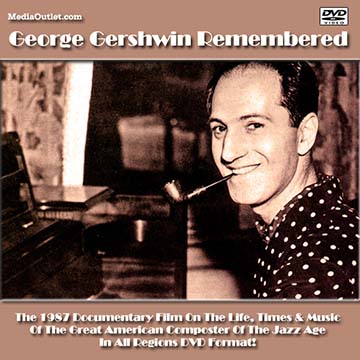
December 6, 1896: #BOTD: #HBD! Ira
Gershwin, American songwriter and lyricist who collaborated with
his younger brother, composer George Gershwin, to create some of
the most memorable songs of the 20th century (d. August 17, 1983)
is #born Israel Gershowitz in New York City. With George he wrote
more than a dozen Broadway shows, featuring songs such as "I
Got Rhythm", "Embraceable You", "The Man I
Love" and "Someone to Watch Over Me". He was also
responsible, along with DuBose Heyward, for the libretto to
George's opera Porgy and Bess. The success the Gershwin brothers
had with their collaborative works has often overshadowed the
creative role that Ira played. His mastery of songwriting
continued, however, after the early death of George. He wrote
additional hit songs with composers Jerome Kern, Kurt Weill, Harry
Warren and Harold Arlen. His critically acclaimed 1959 book Lyrics
on Several Occasions, an amalgam of autobiography and annotated
anthology, is an important source for studying the art of the
lyricist in the golden age of American popular song. Ira Gershwin
died of heart disease in Beverly Hills, California at the age of
86. He is interred at Westchester Hills Cemetery,
Hastings-on-Hudson, New York. On Sale @ 15% Off Discount Till
Midnight PT!
https://store.earthstation1.com/george-gershwin-remembered-dvd-1987-tv-documen1987.html
Today's
EarthStation1.com 15% Off Commemorative Memorial Title: A Moment
In Time (1976) Film History DVD, Video Download, USB Drive
Today, December 6, 2025 
December 6, 1898: #BOTD: #HBD! Alfred
Eisenstaedt, known as "Eisie" to his close friends,
German-born American photographer and photojournalist (d. August
23, 1995) is #born to a Jewish family in Dirschau, West Prussia,
German Empire (now Tczew, Poland). Eisenstaedt was fascinated by
photography from his youth and began taking pictures at age 11
when he was given his first camera, an Eastman Kodak Folding
Camera with roll film. He later served in the German Army's
artillery during World War I and was wounded in 1918. While
working as a belt and button salesman in the 1920s in Weimar
Germany, Eisenstaedt began taking photographs as a freelancer for
the Pacific and Atlantic Photos' Berlin office in 1928. The office
was taken over by the Associated Press in 1931. Eisenstaedt became
a full-time photographer in 1929 when he was hired by the
Associated Press office in Germany, and within a year he was
described as a "photographer extraordinaire." He also
worked for Illustrierte Zeitung, published by Ullstein Verlag,
then the world's largest publishing house. Four years later he
photographed the famous first meeting between Adolf Hitler and
Benito Mussolini in Italy. Other notable early pictures by
Eisenstaedt include his depiction of a waiter at the ice rink of
the Grand Hotel in St. Moritz in 1932 and Joseph Goebbels at the
League of Nations in Geneva in 1933. Although initially friendly,
Goebbels scowled at Eisenstaedt when he took the photograph, after
learning that Eisenstaedt was Jewish. The oppression of the Jews
in Hitler's Nazi Germany caused Eisenstadt and his family to
emigrate to the U.S. They arrived in 1935 and settled in New York,
where he subsequently became a naturalized citizen, and joined
fellow Associated Press emigres Leon Daniel and Celia Kutschuk in
their PIX Publishing photo agency founded that year. The following
year, 1936, Time founder Henry Luce bought Life magazine, and
Eisenstaedt, already noted for his photography in Europe, was
asked to join the new magazine as one of its original staff of
four photographers, including Margaret Bourke-White and Robert
Capa. He remained a staff photographer from 1936 to 1972,
achieving notability for his photojournalism of news events and
celebrities. Along with entertainers and celebrities, he
photographed politicians, philosophers, artists, industrialists,
and authors during his career with Life. By 1972, he had
photographed nearly 2,500 stories and had more than 90 of his
photos on the cover. Among his most famous cover photographs was
V-J Day in Times Square, taken during the V-J Day celebration in
New York City, showing "an exuberant American sailor kissing
a nurse in a dancelike dip [that] summed up the euphoria many
Americans felt as the war came to a close." With Life's
circulation of two million readers, Eisenstaedt's reputation
increased substantially. In subsequent years, he also worked for
Harper's Bazaar, Vogue, Town & Country and others. From his
early years as professional photographer he became an enthusiast
for small 35 mm film cameras, especially the Leica camera. Unlike
most news photographers at the time who relied on much larger and
less portable 4"_5" press cameras with flash
attachments, Eisenstaedt preferred the smaller hand-held Leica,
which gave him greater speed and more flexibility when shooting
news events or capturing candids of people in action. His photos
were also notable as a result of his typical use of natural light
as opposed to relying on flash lighting. In 1944, Life described
him as the "dean of today's miniature-camera experts."
At the time, this style of photojournalism, with a smaller camera
with its ability to use available light, was then in its infancy.
It also helped Eisenstaedt create a more relaxed atmosphere when
shooting famous people where he was able to capture more natural
poses and expressions: "They don't take me too seriously with
my little camera," he stated. "I don't come as a
photographer. I come as a friend." It was a style he learned
from his 35 years in Europe, where he preferred shooting informal,
unposed portraits, along with extended picture stories. As a
result, Life began using more such photo stories, with the
magazine becoming a recognized source of such photojournalism of
the world's luminaries. Of Life's photographers, Eisenstaedt was
most noted for his "human interest" photos and less the
hard news images used by most news publications. His success at
establishing a relaxed setting for his subjects was not without
difficulties, however, when he needed to capture the feeling he
wanted. Anthony Eden, resistant to being photographed, called
Eisenstaedt "the gentle executioner." Similarly, Winston
Churchill told him where to place the camera to get a good
picture, and during a photo shoot of Ernest Hemingway in his boat,
Hemingway, in a rage, tore his own shirt to shreds and threatened
to throw Eisenstaedt overboard. Eisenstaedt enjoyed his annual
August vacations on the island of Martha's Vineyard for 50 years.
During these summers, he would conduct photographic experiments,
working with different lenses, filters, and prisms in natural
light. Eisenstaedt was fond of Martha's Vineyard's photogenic
lighthouses and was the focus of lighthouse fundraisers organized
by Vineyard Environmental Research Institute (VERI). Two years
before his death, Eisenstaedt photographed President Bill Clinton
with wife Hillary and daughter Chelsea. The session took place at
the Granary Gallery in West Tisbury on Martha's Vineyard and was
documented by a photograph published in People magazine on
September 13, 1993. After first settling in New York City in 1935,
Eisenstaedt lived in Jackson Heights, Queens (NYC) for the rest of
his life. He met Kathy Kaye, a South African woman, and married
her in 1949. The couple had no children and remained together
until her death in 1972. Until shortly before Eisenstaedt's death,
he would walk daily from his home to his Life office on the Avenue
of the Americas and 51st Street. Alfred Eisenstaedt died in his
bed at midnight at his beloved Menemsha Inn cottage known as the
"Pilot House" in Oak Bluffs, Massachusetts at age 96 in
the company of his sister-in-law, Lucille Kaye, and a friend,
William E. Marks. He is buried at Mount Hebron Cemetery in
Flushing, Queens. On Sale @ 15% Off Discount Till Midnight PT!
https://store.earthstation1.com/a-moment-in-time-dvd-film-history-narrated-by-gordon-parks.html
Today's
EarthStation1.com 15% Off Commemorative Memorial Title: Portraits
Of American Presidents Nos. 1-42 TV Series MP4 Download DVD
Today, December 6, 2025 
December 6, 1904: The United States: The
History Of The United States: Foreign Policy Doctrines Of The
United States: The Monroe Doctrine: The Roosevelt Corollary: --
Theodore Roosevelt issues his corollary to the Monroe Doctrine,
known as The Roosevelt Corollary, during his State Of The Union
Address, stating that the U.S. would intervene in the Western
Hemisphere should Latin American governments prove incapable or
unstable. This was a reaction to the Venezuela Crisis of 1902-03,
a naval blockade imposed against Venezuela by the United Kingdom,
Germany and Italy, over President Cipriano Castro's refusal to pay
foreign debts and damages suffered by European citizens in the
Venezuelan civil war. At the time, US president Theodore Roosevelt
and the Department of State saw the Monroe Doctrine as concerning
European seizure of territory, rather than outright intervention.
With prior promises that no such seizure would occur, the US
allowed the action to go ahead without objection. The blockade saw
Venezuela's small navy quickly disabled, but Castro refused to
give in, and instead agreed in principle to submit some of the
claims to international arbitration, which he had previously
rejected. Germany initially objected to this, particularly as it
felt some claims should be accepted by Venezuela without
arbitration. President Roosevelt forced the Germans to back down
by sending his own larger fleet under Admiral George Dewey and
threatening war if the Germans landed. When the Permanent Court of
Arbitration in The Hague subsequently awarded preferential
treatment to the blockading powers against the claims of other
nations, the US feared this would encourage future European
intervention. The episode contributed to the development of the
Roosevelt Corollary to the Monroe Doctrine, asserting a right of
the United States to intervene to "stabilize" the
economic affairs of small states in the Caribbean and Central
America if they were unable to pay their international debts, in
order to preclude European intervention to do so. Roosevelt tied
his policy to the Monroe Doctrine, and it was also consistent with
his foreign policy included in his Big Stick Diplomacy. Roosevelt
stated that in keeping with the Monroe Doctrine, the United States
was justified in exercising "international police power"
to put an end to chronic unrest or wrongdoing in the Western
Hemisphere. While the Monroe Doctrine had sought to prevent
European intervention, the Roosevelt Corollary was used to justify
US intervention throughout the hemisphere. In 1934, President
Franklin D. Roosevelt renounced interventionism and established
his Good Neighbor policy for the Western Hemisphere. On Sale @ 15%
Off Discount Till Midnight PT!
https://store.earthstation1.com/portraits-of-american-presidents-nos-142-tv-series-mp4-download1424.html
Today's
EarthStation1.com 15% Off Commemorative Memorial Title: G-Men: The
Rise Of J. Edgar Hoover DVD, Video Download, USB Drive
Today, December 6, 2025 
December 6, 1908: #BOTD: Baby Face
Nelson, also known by the alias George Nelson, an FBI Public Enemy
Number One, American gangster and bank robber in the 1930s (d.
November 27, 1934), is #born Lester Joseph Gillis in Chicago,
Illinois. He was arrested on July 4, 1921 at age twelve, after
accidentally shooting a playmate in the jaw with a pistol that he
had found. He served over a year in the state reformatory. Nelson
was arrested again for car theft and joyriding at age 13 and was
sent to a penal school for an additional 18 months. Nelson was
released on April 11, 1924. Nelson joined a gang during his
mid-teens and became its leader. He was given the nickname Baby
Face Nelson due to his small stature and somewhat youthful
appearance, although few dared call him that to his face. Criminal
associates instead called him "Jimmy". He became
partners with John Dillinger, helping him escape from prison in
Crown Point, Indiana. Nelson and the remaining gang members were
labeled as public enemy number one. Nelson was responsible for
killing more FBI agents than any other person. Baby Face Nelson
died in an intense and deadly gunfight between FBI agents and
Nelson in the town of Barrington, outside Chicago, Illinois. It
resulted in the deaths of Nelson, Federal Agent Herman "Ed"
Hollis and Agent/Inspector Samuel P. Cowley. He is buried at Saint
Joseph Cemetery in River Grove, Cook County, Illinois. On Sale @
15% Off Discount Till Midnight PT!
https://store.earthstation1.com/gmen-the-rise-of-j-edgar-hoover-dvd.html
Today's
EarthStation1.com 15% Off Commemorative Memorial Title: The
History Of Jazz A Video Retrospective DVD, MP4 Download, USB Drive
Today, December 6, 2025 
December 6, 1920: #BOTD: #HBD! Dave
Brubeck, American jazz pianist and composer, considered to be one
of the foremost exponents of cool jazz (d. December 5, 2012) is
#born David Warren Brubeck in Concord, California. Brubeck had
Swiss ancestry (the family surname was originally Brodbeck), and
possibly Native American Modoc lineage, while his maternal
grandparents were English and German. Dave Brubeck wrote a number
of jazz standards, including "In Your Own Sweet Way" and
"The Duke". Brubeck' style ranged from refined to
bombastic, reflecting his mother' attempts at classical training
and his improvisational skills. His music is known for employing
unusual time signatures, and superimposing contrasting rhythms,
meters, and tonalities. His long-time musical partner, alto
saxophonist Paul Desmond, wrote the saxophone melody for the Dave
Brubeck Quartet' best remembered piece, "Take Five",
which is in 5/4 time and has endured as a jazz classic on one of
the top-selling jazz albums, Time Out. Brubeck experimented with
time signatures throughout his career, recording "Pick Up
Sticks" in 6/4, "Unsquare Dance" in 7/4, "World'
Fair" in 13/4, and "Blue Rondo a la Turk" in 9/8.
He was also a respected composer of orchestral and sacred music
and wrote soundtracks for television, such as Mr. Broadway and the
animated miniseries This Is America, Charlie Brown. Dave Brubeck
died of heart failure in Norwalk, Connecticut, one day before his
92nd birthday, while on his way to a cardiology appointment,
accompanied by his son Darius. A birthday party concert had been
planned for him with family and famous guests. He is interred at
Umpawaug Cemetery in Redding, Connecticut. A memorial tribute was
held in May 2013. On Sale @ 15% Off Discount Till Midnight PT!
https://store.earthstation1.com/the-history-of-jazz-by-billy-taylor-parts-i-amp-ii-dvd.html
Today's
EarthStation1.com 15% Off Commemorative Memorial Title: James
Joyce's Ulysses + Portrait Of The Artist DVD, MP4, USB Drive
Today, December 6, 2025 
December 6, 1933: Censorship: Obscenity
Controversies In Literature: Freedom Of Speech (Freedom Of
Expression): Ulysses (Novel): United States v. One Book Called
Ulysses: -- U.S. federal judge John M. Woolsey rules in the case
of United States v. One Book Called Ulysses that James Joyce's
novel Ulysses is not obscene. Even before its publication in 1922,
serialized chapters of the book appearing in The Little Review
literary magazine as early as 1918 were being seized and burned by
the US Postal Service as early as 1919. The publishers were
arrested on October 4, 1920 and charged with obscenity for
publishing the "Nausicaa" episode of Ulysses. The trial
was held in February 1921, and a panel of three judges decided
that the passages from the "Nausicaa" episode did indeed
constitute obscenity. In 1933 Random House, which had the rights
to publish the entire book in the United States, decided to bring
a test case to challenge the de facto ban, so as to publish the
work without fear of prosecution. It therefore made an arrangement
to import the edition published in France, and to have a copy
seized by the U.S. Customs Service when the ship carrying the work
arrived. Although Customs had been told in advance of the
anticipated arrival of the book, the local official declined to
confiscate it, stating "everybody brings that in." He
and his superior were finally convinced to seize the work. The
United States Attorney then took seven months before deciding
whether to proceed further. While the Assistant U.S. Attorney
assigned to assess the work's obscenity felt that it was a
"literary masterpiece," he also believed it to be
obscene within the meaning of the law. The book has attracted
controversy and scrutiny, ranging from the 1921 obscenity trial in
America to protracted textual "Joyce Wars". Ulysses's
stream-of-consciousness technique, careful structuring, and
experimental prose - full of puns, parodies, and allusions - as
well as its rich characterisation and broad humour, have led it to
be regarded as one of the greatest literary works. Joyce fans
worldwide now celebrate June 16 as Bloomsday. On Sale @ 15% Off
Discount Till Midnight PT!
https://store.earthstation1.com/james-joyce39s-ulysses-dvd-dramatic-documenta39.html
Today's
EarthStation1.com 15% Off Commemorative Memorial Title: Franz
Kafka Biography / The Trial / The Metamorphosis MP4 Download DVD
Today, December 6, 2025 
December 6, 1953: Literature: -- Lolita,
the Russian-American novelist, poet, translator and entomologist
Vladimir Nabokov's controversial novel in which a middle-aged
literature professor under the pseudonym Humbert Humbert becomes
sexually involved with 12-year-old Dolores Haze after he becomes
her stepfather, is completed. "Lolita" is his private
nickname for Dolores. The novel was originally written in English
and first published in Paris in 1955 by Olympia Press. Later it
was translated into Russian by Nabokov himself and published in
New York City in 1967 by Phaedra Publishers. Lolita quickly
attained a classic status. The novel was adapted into a film by
Stanley Kubrick in 1962, and another film by Adrian Lyne in 1997.
It has also been adapted several times for the stage and has been
the subject of two operas, two ballets, and an acclaimed but
commercially unsuccessful Broadway musical. Its assimilation into
popular culture is such that the name "Lolita" has been
used to imply that a young girl is sexually precocious. Many
authors consider it the greatest work of the 20th century, and it
has been included in several lists of best books, such as Time's
List of the 100 Best Novels, Le Monde's 100 Books of the Century,
Bokklubben World Library, Modern Library's 100 Best Novels, and
The Big Read. On Sale @ 15% Off Discount Till Midnight PT!
https://store.earthstation1.com/franz-kafka39s-the-trial-dvd-1987-docum391987.html
Today's
EarthStation1.com 15% Off Commemorative Memorial Title: Legacy
With Michael Wood World History TV Series DVD, MP4, USB Stick
Today, December 6, 2025 
December 6, 1971: The Aftermath Of World
War II: The Cold War: The Cold War In Asia: Indo-Pakistani Wars
And Conflicts: The Bangladesh Liberation War: -- The Democratic
Republic Of Bangladesh, formerly East Pakistan until it declared
its independence from Pakistan on March 26, 1971, receives
diplomatic recognition by India; Pakistan responds by breaking off
diplomatic relations with India. Bangladesh (Bengali: pronounced
BONG-lah-daysh), officially the People's Republic Of Bangladesh,
is the eighth-most populous country in the world, with a
population exceeding 162 million people. In terms of landmass,
Bangladesh ranks 92nd, spanning 148,460 square kilometres (57,320
sq mi), making it one of the most densely populated countries in
the world. Bangladesh shares land borders with India to the west,
north, and east, Myanmar to the southeast, and the Bay of Bengal
to the south. It is narrowly separated from Nepal and Bhutan by
the Siliguri Corridor, and from China by Sikkim, in the north,
respectively. Dhaka, the capital and largest city, is the nation's
economic, political, and cultural hub. Chittagong, the largest
seaport, is the second-largest city. On Sale @ 15% Off Discount
Till Midnight PT!
https://store.earthstation1.com/legacy-with-michael-wood-world-history-tv-series-dvd-mp4-us4.html
Today's
EarthStation1.com #OnThisDay Commemorative Memorial Title:
Challenge Of The Yukon Old Time Radio Series MP3 Set DVD Download
USB
Today, December 6, 2025  December 6: Mitten Tree Day: -- A fun
holiday that encourages using and giving mittens. Mittens are the
perfect solution to keep our hands warm when playing in the snow
and building snowmen. But mittens are also the perfect gift for
those who do not have a heater or fireplace to keep them warm. So,
purchase (or knit) some creative and colorful mittens that you
would love to sport when you step out of the house - plus a few
extra for someone less fortunate than you. We don't know the
details of the history of Mitten Tree Day, but there is a belief
that school teachers formed it during Christmas time. The idea of
Mitten Tree Day is said to have emerged as a fun class activity,
which they named after a book called "The Mitten Tree."
The book's author, Candace Christiansen, focused the storyline on
a woman who missed her grown-up children. In the book, the lady
walks through the cold winter weather and spots a few children
waiting at the school bus stop. The lady notices that the children
want to play in the snow but can't because they don't have any
mittens to protect their hands. Feeling sorry for the kids, she
knits a basket full of mittens and hangs them on a tree near the
bus stop. The woman continues to knit mittens for the kids of her
town and no longer drowns in the memories of her children.
According to sources, the name 'mittens' comes from the Old French
word 'mitaine.' It was an old pet name for a cat, and at that
time, mittens were made of animal fur. The earliest mittens found
are said to date back to 1000 A.D. Mittens were also very common
in medieval Europe. However, since they were hard to make, they
were often worn as a fashion statement by the wealthy. Today, we
make mittens from different materials like wool, leather, fur, or
polyester. They also tend to be warmer than gloves because our
fingers generate more heat when they are together.
https://store.earthstation1.com/challenge-of-the-yukon-mp3-dvd-complete-radio-broadcast3.html
December 6: Mitten Tree Day: -- A fun
holiday that encourages using and giving mittens. Mittens are the
perfect solution to keep our hands warm when playing in the snow
and building snowmen. But mittens are also the perfect gift for
those who do not have a heater or fireplace to keep them warm. So,
purchase (or knit) some creative and colorful mittens that you
would love to sport when you step out of the house - plus a few
extra for someone less fortunate than you. We don't know the
details of the history of Mitten Tree Day, but there is a belief
that school teachers formed it during Christmas time. The idea of
Mitten Tree Day is said to have emerged as a fun class activity,
which they named after a book called "The Mitten Tree."
The book's author, Candace Christiansen, focused the storyline on
a woman who missed her grown-up children. In the book, the lady
walks through the cold winter weather and spots a few children
waiting at the school bus stop. The lady notices that the children
want to play in the snow but can't because they don't have any
mittens to protect their hands. Feeling sorry for the kids, she
knits a basket full of mittens and hangs them on a tree near the
bus stop. The woman continues to knit mittens for the kids of her
town and no longer drowns in the memories of her children.
According to sources, the name 'mittens' comes from the Old French
word 'mitaine.' It was an old pet name for a cat, and at that
time, mittens were made of animal fur. The earliest mittens found
are said to date back to 1000 A.D. Mittens were also very common
in medieval Europe. However, since they were hard to make, they
were often worn as a fashion statement by the wealthy. Today, we
make mittens from different materials like wool, leather, fur, or
polyester. They also tend to be warmer than gloves because our
fingers generate more heat when they are together.
https://store.earthstation1.com/challenge-of-the-yukon-mp3-dvd-complete-radio-broadcast3.html
Today's
EarthStation1.com #OnThisDay Commemorative Memorial Title: TV
Commercials: The Cable Age Classics II DVD, Download, USB Drive
Today, December 6, 2025 December 6: National Microwave Oven Day:
-- A day of honor for an appliance that changed how we use the
kitchen. Quite by accident, self-taught American engineer Percy
Spencer discovered a way to heat food safely with microwaves.
While working with an active radar in 1945, he noticed a melting
chocolate bar in his pocket. The high-powered microwave beams
created a heating effect ideal for cooking. Spencer deliberately
attempted cooking popcorn with the microwaves. Next, he tried
cooking an egg. Both the popcorn and the egg created dramatic
results. However, the popcorn resulted in success, unlike the egg.
The egg exploded in his fellow engineer's face! However, we can
cook eggs in microwave ovens. Try poaching one. Spencer, employed
by Raytheon, continued experimenting with different methods of
heating food safely with microwaves. Raytheon filed a United
States patent application for Spencer's microwave cooking process
on October 8th, 1945. In 1947, Raytheon built the first
commercially available microwave oven. It was called the
"Radarange." An estimated 90% of homes in the United
States now have a microwave in them. To observe #MicrowaveOvenDay:
The microwave oven cooks more than popcorn - so use this
celebration to explore the many uses of the microwave oven!
https://store.earthstation1.com/tv-commercials-the-cable-age-classics-ii-dvd.html
Today's
EarthStation1.com #OnThisDay Commemorative Memorial Title: The
Charlie Chaplin Carnival, Festival & Cavalcade DVD, MP4, USB
Drive
Today, December 6, 2025 December 6: National Pawnbrokers Day: --
The word 'pawn' comes from 'patinum,' the Latin word for 'cloth'
or 'clothing.' Pawnbroking history goes back thousands of years to
the ancient Roman and Greek empires and China in the East.
Pawnbrokers provide cash loans in exchange for goods and property
as collateral. The pawnbroker returns the collateral after the
person repays the loan with interest. If clients don't pay up,
they forfeit their property, and the pawnbroker can sell it to
recoup the loan. But pawnbrokers can also play the role of a
charitable organization. In Perugia, Italy, a Franciscan friar,
Barnaba Manassei, started the Monte di Pieta initiative in 1450.
The movement offered financial aid to people, giving them
no-interest loans for pawned items. The idea was to get people to
make donations to the church as opposed to paying interest. The
idea gained popularity in Italy and then spread to other regions
in Europe. It might surprise you to know that musical instruments
are among the most pawned items over the centuries. On Pawnbrokers
Day, pawnbrokers often donate the forfeited instruments to schools
or charitable organizations who need them, which allows children
who wouldn't ordinarily have access to these instruments the
opportunity to use them. Talk about modern-day heroes! But they
weren't always considered heroes. From 1603 until 1872, an act was
passed against brokers that aimed to undermine counterfeit brokers
throughout London. Brokers in this category were referred to as
fences. In England, the Pawnbrokers Act of 1872 established
regulations that protected pawnbrokers who unwittingly sold stolen
items. It also established the interest rate on pawned items and
general guidelines that define the industry to this day.
https://store.earthstation1.com/the-charlie-chaplin-carnival-festival-and-cavalcade-dvd-12-sound-fil12.html
Today's
EarthStation1.com #OnThisDay Commemorative Memorial Title: John L.
Lewis Documentary Biography DVD, Video Download, USB Drive
Today, December 6, 2025 December 6: National Miners Day: --
Congress has declared this day to recognize the efforts of miners
to help ensure them safe working conditions, as they have one of
the most difficult and dangerous jobs you can imagine. Our entire
economy depends on them. On this holiday, we should all take a
moment to think about the many ways that miners play a role in our
daily lives. Mined materials contribute to things like roads,
houses, cars and computers. We wouldn't be able to get much done
without their hard work. Digging deep, they unearth treasures from
the belly of the earth, a relentless pursuit of resources that
fuels progress and innovation. The men and women who spend every
day digging in the earth are some of the greatest unsung heroes of
industry and modern civilization. They dig deep into the darkest
places in the world to bring out the riches that help to sustain
our lifestyles. From the steel for our cars, to the copper wiring
that binds together our digital world together, everything we
think of as our modern lives and comforts exist on the back of
these intrepid people. The history of mining reaches into
prehistory, where resources such as flint were removed from the
earth to produce the highest quality tools of the age. As time
went on and more was understood about the nature of ores and how
to process them, gold, turquoise, and malachite (the ore from
which copper is derived) mines began to appear all over the world.
Better technology allowed the development of new mining
techniques, and more uses for existing and newly discovered
resources. Even in these ancient days, the bronze and iron brought
forth from the earth was used to plow the ground, fight wars, and
build grand edifices that would stand the test of time. Miners'
Day was established to celebrate and recognize those who take part
in this dangerous profession, to help our lives be comfortable and
full of conveniences. Thanks to the efforts of the president of
the Miners' Day Memorial Association of West Virginia (MDMAWV) Roy
Lee Cooke, National Miners' Day was established in 2009 by the
passing of a resolution by the United States Senate.
https://store.earthstation1.com/john-l-lewis-dvd-united-mine-workers-afl-cio.html
Today's
EarthStation1.com #OnThisDay Commemorative Memorial Title: Earle
Doud: Spiro T. Agnew Is A Riot! Comedy Album MP3s CD Download USB
Today, December 6, 2025 December 6, 1973: Scandals: Political
Scandals: Political Scandals Of The United States: Richard Nixon:
The Presidency Of Richard Nixon: The Watergate Scandal: The
Constitution Of The United States: The Twenty-Fifth Amendment To
The United States Constitution (Amendment XXV): -- The United
States House Of Representatives votes 387 to 35 to confirm Gerald
Ford as Vice President of the United States. Earlier, on November
27, the Senate had confirmed him 92 to 3. Gerald Ford was then
sworn in as vice president under Richard Nixon following the
resignation of Spiro Agnew who pleaded no contest to charges of
income tax evasion.
https://store.earthstation1.com/earle-doud-spiro-t-agnew-is-a-riot-comedy-album-mp3-c3.html
Today's
EarthStation1.com #OnThisDay Commemorative Memorial Title: The
Weavers: Wasn't That A Time! DVD, Video Download, USB Flash Drive
Today, December 6, 2025 December 6, 1949: #DOTD: #RIP: Lead
Belly, sometimes credited as Leadbelly, African American folk and
blues singer notable for his strong vocals, virtuosity on the
twelve-string guitar, and the folk standards he introduced,
including his renditions of "In the Pines", "Goodnight,
Irene", "Midnight Special", "Cotton Fields",
and "Boll Weevil", who recorded the earliest audio
recording of the phrase "stay woke" (b. January 20,
1888) #dies in New York City, aged 61 of Amyotrophic Lateral
Sclerosis (ALS, Lou Gehrig's Disease), a rare and terminal
neurodegenerative disease that results in the progressive loss of
motor neurons that control voluntary muscles. He is buried in the
Shiloh Baptist Church cemetery in the municipality of his birth,
Mooringsport, Louisiana, 8 miles (13 km) west of Blanchard, in
Caddo Parish. He is honored with a statue across from the Caddo
Parish Courthouse, in Shreveport. Lead Belly was born Huddie
William Ledbetter on a plantation, the younger of the two children
of Sallie Brown and Wesley Ledbetter. Lead Belly usually played a
twelve-string guitar, but he also played the piano, mandolin,
harmonica, violin, and windjammer. In some of his recordings, he
sang while clapping his hands or stomping his foot. Lead Belly's
songs covered a wide range of genres, including gospel music,
blues, and folk music, as well as a number of topics, including
women, liquor, prison life, racism, cowboys, work, sailors, cattle
herding, and dancing. He also wrote songs about people in the
news, such as Franklin D. Roosevelt, Adolf Hitler, Jean Harlow,
Jack Johnson, the Scottsboro Boys and Howard Hughes. In 1949, Lead
Belly had a regular radio show, Folk Songs of America, broadcast
on station WNYC in New York, on Henrietta Yurchenco's show on
Sunday nights. Lead Belly was posthumously inducted into The Rock
And Roll Hall Of Fame in 1988 and the Louisiana Music Hall of Fame
in 2008. Though many releases credit him as "Leadbelly",
he wrote his name as "Lead Belly". This is the spelling
on his tombstone and is used by the Lead Belly Foundation.
https://store.earthstation1.com/the-weavers-wasn39t-that-a-time-dvd-1981-docum391981.html
Today's
EarthStation1.com #OnThisDay Commemorative Memorial Title: The
Dancing Man: Peg Leg Bates DVD, MP4 Video Download, Flash Drive
Today, December 6, 2025 December 6, 1998: #DOTD: #RIP: Peg Leg
Bates, African American tap dancer, entertainer and entrepreneur
(b. October 11, 1907) #dies at the age of 91 after he collapsed on
his way to church a day after performing at an award ceremony in
his honor at Hillcrest High School and to receive the Order of the
Palmetto, the highest civilian honor awarded by the Governor of
South Carolina. He is buried at Palentown Cemetery in Palentown,
Ulster County, New York. Born Clayton Bates in Fountain Inn, South
Carolina, the son of Rufus and Emma W Stewart Bates. His mother
was a sharecropper. By the age of five, Bates was dancing on the
streets of Fountain Inn for pennies and nickels; he lost a leg at
the age of 12 in a cotton gin accident. His uncle, Wit, made his
crude first "peg leg" after returning home from World
War I and finding his nephew handicapped. Bates subsequently
taught himself to tap dance with a wooden peg leg. By the time he
was 15, Bates was again adept enough at dancing to enter amateur
talent shows, working his way up to employment through the Theater
Owners Booking Association, which booked entertainers for African
American theaters in the US. At 20, Bates was dancing on Broadway.
In the early 1940s, at the Paradise Club in Atlantic City, New
Jersey, his "Jet Plane" finale, in which he leaped over
the stage, landed on his wooden leg, and then executed a series of
backward hops accompanied by trumpet blasts from the band, saw his
leg puncture the wooden stage floor. It took half an hour to pull
him out. After that, the stage floor was reinforced with metal
sheeting. Bates performed on The Ed Sullivan Show 22 times, and
had two command performances before the King and Queen Of England
in 1936 and then again in 1938. During a USO hospital tour, he
partnered with vaudeville tap dancer Dixie Roberts, who said "he
danced better with one leg than anyone else could with two."
He was part of the first Louis Armstrong tour of Britain in the
mid 1950s. He owned and operated the Peg Leg Bates Country Club in
Kerhonkson, New York, from 1951 to 1987, along with his wife Alice
E. Bates. This made Bates the first black resort owner in Ulster
County in the Catskill Mountains, the famous Borscht Belt of
Jewish resorts, hotels, and bungalow colonies. He began with four
rooms at his country club resort; by 1985, there were 110 units
for guests. He leased the resort in 1989, due to the death of his
wife in 1987. Though Bates retired from show business in 1989, he
still performed for various groups, including senior citizens,
children and disabled individuals. He was also active in the local
Ellenville Lions Club, and during the last 10 years of his life he
traveled regularly to schools, senior citizen centers, and nursing
homes showing a video about his life and talking about his life
experiences. He also helped found a local Senior Citizens Center
in the Ellenville / Kerhonkson area. PBS made a documentary of his
life in the 1980s. The South Carolina ETV made a documentary about
Bates in the early 2000s. He collapsed on his way to church a day
after performing at an award ceremony in his honor at Hillcrest
High School and to receive the Order of the Palmetto, the highest
civilian awarded by the state of South Carolina, on December 8,
1998, at the age of 91. Bates had a daughter, Melodye
Bates-Holden. The citizens of Fountain Inn erected a life-size
statue that can be viewed in front of the city hall and Robert
Quillen's library. There are signs at the entrance of the city
saying "Peg Leg Bates' home town." U.S. Route 209 in
Ulster County, New York has been named the "Clayton Peg Leg
Bates Memorial Highway". In 1991 Bates was awarded the
Flo-Bert Award for being an outstanding figure in the field of tap
dancing. Bates was inducted into the International Tap Dance Hall
of Fame in 2005.
https://store.earthstation1.com/the-dancing-man-peg-leg-bates-dvd.html
Today's
EarthStation1.com #OnThisDay Commemorative Memorial Title: Rock &
Roll An Unruly History 10 Part TV Series MP4 Video Download DVD
Today, December 6, 2025 December 6, 1988: #DOTD: #RIP: Roy
Orbison, American singer-songwriter (b. April 23, 1936) #dies of a
heart attack at the age of 52. Orbison had performed at the Front
Row Theater in Highland Heights, Ohio on December 4, 1988.
Exhausted, he returned to his home in Hendersonville to rest for
several days before flying again to London to film two more videos
for the Traveling Wilburys. On December 6, 1988, he spent the day
flying model aeroplanes with his sons and ate dinner at his
mother's home in Hendersonville, Tennessee. Later that day, he
died of a heart attack at the age of 52. A memorial for Orbison
was held in Nashville, and another was held in Los Angeles. He was
buried at Westwood Village Memorial Park Cemetery in Westwood, Los
Angeles County, California in an unmarked grave. Born Roy Kelton
Orbison in Vernon, Texas, Orbison was an American singer,
songwriter, and musician known for his impassioned singing style,
complex song structures, and dark, emotional ballads. Many critics
described his music as operatic, nicknaming him "the Caruso
of Rock" and "the Big O". While most male
rock-and-roll performers in the 1950s and 1960s projected a
defiant masculinity, many of Orbison's songs conveyed
vulnerability. He performed standing still, wearing black clothes
to match his dyed black hair and dark sunglasses. Orbison began
singing in a rockabilly and country-and-western band in high
school. He was signed by Sam Phillips, of Sun Records, in 1956,
but his greatest success came with Monument Records. From 1960 to
1966, 22 of his singles reached the Billboard Top 40, and he wrote
or co-wrote almost all that rose to the Top 10, including "Only
the Lonely" (1960), "Running Scared" (1961),
"Crying" (1961), "In Dreams" (1963), and "Oh,
Pretty Woman" (1964). Soon afterward, he was struck by a
number of personal tragedies while his record sales declined. In
the 1980s, Orbison experienced a resurgence in popularity
following the success of several cover versions of his songs. In
1988, he co-founded the Traveling Wilburys, a rock supergroup,
with George Harrison, Bob Dylan, Tom Petty, and Jeff Lynne.
Orbison died of a heart attack in December 1988 at the age of 52.
One month later, Orbison's song "You Got It" (1989),
co-written with Lynne and Petty, was released as a solo single and
became his first hit to reach the U.S. Top 10 in nearly 25
years.Orbison's honors include inductions into The Rock And Roll
Hall Of Fame in 1987, the Nashville Songwriters Hall of Fame in
the same year, the Songwriters Hall of Fame in 1989, and the
Musicians Hall of Fame and Museum in 2014. Rolling Stone placed
him at number 37 on their list of the "Greatest Artists of
All Time" and number 13 on their list of the "100
Greatest Singers of All Time'. In 2002, Billboard magazine listed
Orbison at number 74 in the Top 600 recording artists.
https://store.earthstation1.com/rock-amp-roll-an-unruly-history-10-part-tv-series-mp4-video-download-104.html
Today's
EarthStation1.com #OnThisDay Commemorative Memorial Title: WABC
Radio Airchecks MP3 Collection 1960s-1980s DVD, MP3 Download, USB
Today, December 6, 2025 December 6, 2011: #DOTD: #RIP: Dobie
Gray, African American singer, songwriter and record producer
whose musical career spanned soul, country, pop, and musical
theater (b. July 26, 1940) #dies of complications from cancer
surgery in Nashville, Tennessee, aged 71. His remains are buried
at Woodlawn Memorial Park And Mausoleum in Nashville, Tennessee.
Upon his passing, he bequeathed 100% of his musical assets and
royalties in trust to benefit St. Jude Children's Research
Hospital and the Tennessee School for the Blind. Dobie Gray was
born in Simonton, Texas, most likely with the name Lawrence Darrow
Brown, as it's listed in Fort Bend County;s birth records; other
sources suggest he may have been born Leonard Victor Ainsworth, a
name he used on some early recordings. His hit records included
the iconic "The 'In' Crowd" in 1965, and "Drift
Away", which was one of the biggest hits of 1973, selling
over one million copies, and remains a staple of radio airplay.
https://store.earthstation1.com/wabc-musicradio-shows-mp3-dvd-60s80s-am-360807775.html
Today's
EarthStation1.com #OnThisDay Commemorative Memorial Title: World
War 1 TV Series With Robert Ryan DVD, Video Download, USB Drive
Today, December 6, 2025 December 6, 1886: #BOTD: #HBD! Joyce
Kilmer, American soldier, journalist, and poet (d. July 30, 1918)
is #born Alfred Joyce Kilmer in New Brunswick, New Jersey. Joyce
is mainly remembered for a short poem titled "Trees"
(1913), which was published in the collection Trees and Other
Poems in 1914. Though a prolific poet whose works celebrated the
common beauty of the natural world as well as his Roman Catholic
religious faith, Kilmer was also a journalist, literary critic,
lecturer, and editor. While most of his works are largely unknown,
a select few of his poems remain popular and are published
frequently in anthologies. Several critics-including both Kilmer's
contemporaries and modern scholars-have disparaged Kilmer's work
as being too simple and overly sentimental, and suggested that his
style was far too traditional, even archaic. Many writers,
including notably Ogden Nash, have parodied Kilmer's work and
style-as attested by the many parodies of "Trees". At
the time of his deployment to Europe during World War I, Kilmer
was considered the leading American Roman Catholic poet and
lecturer of his generation, whom critics often compared to British
contemporaries G. K. Chesterton (1874-1936) and Hilaire Belloc
(1870-1953). He enlisted in the New York National Guard and was
deployed to France with the 69th Infantry Regiment (the famous
"Fighting 69th") in 1917. He was married to Aline
Murray, also an accomplished poet and author, with whom he had
five children. He died aged 31 when he was killed by a sniper's
bullet near Ourcy, France at the age of 31 during the Second
Battle Of The Marne. He is buried at Oise-Aisne American Cemetery
and Memorial in Fere-en-Tardenois, Departement de l'Aisne,
Picardy, France. The U.S. Army's Camp Kilmer was named in his
honor. Camp Kilmer, New Jersey is a former United States Army camp
that was activated in June 1942 as a staging area and part of an
installation of the New York Port of Embarkation. The camp was
organized as part of the Army Service Forces Transportation Corps.
Located in Piscataway Township, New Jersey and Edison Township,
New Jersey, the closest city was New Brunswick two miles to the
south. Troops were quartered at Camp Kilmer in preparation for
transport to the European Theater of Operations in World War II.
Eventually, it became the largest processing center for troops
heading overseas and returning from World War II, processing over
2.5 million soldiers. It officially closed in 2009.
https://store.earthstation1.com/world-war-1-robert-ryan-4-dual-layer-dvds-26-episode-tv-se1426.html
Today's
EarthStation1.com #OnThisDay Commemorative Memorial Title:
Vietnam: The Ten Thousand Day War TV Series DVD, Video Download,
USB
Today, December 6, 2025 December 6, 2002: #DOTD: #RIP: Philip
Berrigan, controversial American Josephite Catholic priest and
peace activist (b. October 5, 1923) #dies of liver and kidney
cancer at the age of 79 at Jonah House in Baltimore. He is buried
at Saint Peter's Cemetery in Baltimore, Maryland. In a last
statement, he said "I die with the conviction, held since
1968 and Catonsville, that nuclear weapons are the scourge of the
earth; to mine for them, manufacture them, deploy them, use them,
is a curse against God, the human family, and the earth itself."
Howard Zinn, Professor Emeritus at Boston University, paid this
tribute to Berrigan saying: "Mr. Berrigan was one of the
great Americans of our time. He believed war didn't solve
anything. He went to prison again and again and again for his
beliefs. I admired him for the sacrifices he made. He was an
inspiration to a large number of people." The funeral was
held at St. Peter Claver Church in West Baltimore and he was
buried in West Baltimore cemetery. He was survived by his widow,
Elizabeth McAlister, with whom he had three children: Frida (b.
1974), Jerry (b. 1975), and Kate (b. 1981). McAlister and others
still maintain Jonah House in Baltimore and a website that details
all Plowshares activities. He also is survived by four brothers,
Daniel, John, Jim, and Jerome; his wife, Elizabeth McAlister; and
their three children, Frida, Jerry, and Kate, are or were all also
activists in the peace movement. Philip Berrigan was born Philip
Francis Berrigan in Two Harbors, Minnesota. Philip Francis
Berrigan, SSJ (S.ociety of S.aint J.oseph of the Sacred Heart)
engaged in nonviolent, civil disobedience in the cause of peace
and nuclear disarmament and was often arrested. He later married a
former nun, Elizabeth McAlister, in 1969; in 1973, they legalized
their marriage, and both were subsequently excommunicated by the
Catholic Church, though their excommunication was later lifted.
Together they founded Jonah House in Baltimore, a community to
support resistance to war. For eleven years of their 29-year
marriage they were separated by one or both serving time in
prison. Philip Berrigan earned, like many others during the 1960s,
both scorn and admiration for his active protest against the
Vietnam War. Philip Berrigan was one of "The Baltimore Four"
- along with artist Tom Lewis, writer David Eberhardt, and United
Church of Christ pastor Rev. James L. Mengel III - who on October
27, 1967 protested the Vietnam War by occupying the Selective
Service Board in the Customs House, Baltimore and by performing a
sacrificial, blood-pouring protest using their own blood and that
from poultry, pouring it over Selective Service records. Berrigan,
in a written statement, noted that his sacrificial and
constructive act was meant to protest "the pitiful waste of
American and Vietnamese blood in Indochina". The trial of the
four defendants was postponed due to the assassination of Martin
Luther King, Jr. and the subsequent riots in Baltimore and other
U.S. cities. Eberhardt and Lewis served jail time and Berrigan was
sentenced to six years in federal prisons. Philip Berrigan was
also one of "The Catonsville Nine", nine Catholic
activists who burned draft files to protest the Vietnam War. who
on May 17, 1968 went to the draft board in Catonsville, in the
U.S. state of Maryland, took 378 draft files, brought them to the
parking lot in wire baskets, dumped them out, poured over them
home-made napalm (an incendiary used extensively by the US
military in Vietnam), and set them on fire. The Nine, besides
Philip Berrigan, were his brother, Father Daniel Berrigan, a
Jesuit priest; Br. David Darst, a De La Salle Christian Brother;
John Hogan; Tom Lewis, an artist; Marjorie Bradford Melville;
Thomas Melville, a former Maryknoll priest; George Mische; and
Mary Moylan. Philip Berrigan was convicted of conspiracy and
destruction of government property on November 8, 1968, but was
bailed for 16 months while the case went to the U.S. Supreme
Court. The court rejected the appeal and Berrigan and three others
went into hiding. For a time, Liz McAlister, the nun who would
later become his wife, helped hide Berrigan in New Jersey. Twelve
days later Berrigan was arrested by the FBI and jailed in
Lewisburg. All nine were sentenced to three years in prison. Then
Philip Berrigan again attracted the notice of federal authorities
when he and six other anti-war activists known as The Harrisburg
Seven were caught trading letters alluding to kidnapping Henry
Kissinger and placing him under house arrest for waging of an
illegal war, and for bombing steam heating tunnels in Washington,
D.C.; they were in fact only discussing the idea. They were
nonetheless charged with 23 counts of conspiracy The government
spent 1M USD on the 1972 Harrisburg Seven trial but did not win a
conviction. This was one of a number of the reversals suffered by
the U.S. government in such cases, such as The Camden 28, who on
August 22, 1971 took action against the Camden area draft board.
The group, which also included Philip Berrigan,, was arrested and
the trial resulted in acquittal on all charges. Berrigan organized
or inspired many additional operations. The D.C. Nine, in March
1969, consisted of mostly priests and nuns disrupting the
Washington Dow Chemical offices by scattering their files. The
group protested Dow's production of napalm for use in the Vietnam
War. The D.C. Nine were later tried in Washington, D.C., but an
appeal was won in their favor. Some jail time was served. Later in
May 1969, the Chicago 15 Catholics protested napalm and burned
40,000 draft cards. He helped the Milwaukee 14 in a protest
against the Milwaukee Draft Boards on September 24, 1968. The
Fourteen men burned 10,000 1-A draft files. After being arrested,
they spent a month in prison, unable to raise bail set at 415K
USD. Father James Groppi came to their aid, co-chairing the
Milwaukee 14 Defense Committee. Members were later placed on trial
and many did considerable jail time. In 1968, Berrigan signed the
Writers and Editors War Tax Protest pledge, vowing to refuse tax
payments in protest against the Vietnam War. On September 9, 1980,
Berrigan, his brother Daniel, with Sister Anne Montgomery, Elmer
H. Maas, Rev. Carl Kabat, O.M.I., John Schuchardt, Dean Hammer and
Molly Rush known as the Plowshares Eight entered the General
Electric Re-entry Division in King of Prussia, Pennsylvania, where
Mark 12A reentry vehicles for the Minuteman III Intercontinental
Ballistic missiles (ICBMs) were made. They hammered on two reentry
vehicles, poured blood on documents, and offered prayers for
peace. This is considered the beginning of the Plowshares
Movement. They were arrested and charged with ten different felony
and misdemeanor counts. On April 10, 1990, after nearly ten years
of trials and appeals, the Plowshares Eight were re-sentenced and
paroled for up to 23 months in consideration of time already
served in prison. Berrigan helped set up Jonah House as the
community headquarters of the organisation, a terraced house in
Reservoir Hill, Baltimore. The headquarters later was moved to St.
Peter the Apostle Cemetery in West Baltimore. Berrigan's last
Plowshares action occurred in December 1999, when a group of
protesters hammered on A-10 Warthog warplanes held at the Warfield
Air National Guard Base. He was indicted for malicious destruction
of property and sentenced to 30 months in prison. He was released
on December 14, 2001. In his lifetime he had spent about 11 years
in jails and prisons for civil disobedience. In one of his last
public statements, Berrigan said: "The American people are,
more and more, making their voices heard against Bush and his
warrior clones. Bush and his minions slip out of control,
determined to go to war, determined to go it alone, determined to
endanger the Palestinians further, determined to control Iraqi
oil, determined to ravage further a suffering people and their
shattered society. The American people can stop Bush, can yank his
feet closer to the fire, can banish the war makers from Washington
D.C., can turn this society around and restore it to faith and
sanity."
https://store.earthstation1.com/vietnam-the-10000-day-war-4-dual-layer-dvds-all-13-10000413.html
Today's
EarthStation1.com #OnThisDay Commemorative Memorial Title: The
Golden Age Of Comedy 5 Album Set CD, MP3, USB Stick
Today, December 6, 2025 December 6, 1993: #DOTD: #RIP: Don
Ameche, American actor, comedian and vaudevillian (b. May 31,
1908) #dies at his son Don, Jr.'s house in Scottsdale, Arizona, of
prostate cancer at age 85. He was cremated and his ashes are
buried at Resurrection Catholic Cemetery in Asbury, Iowa. Don
Ameche was born Dominic Felix Amici in Kenosha, Wisconsin. His
father, Felice Amici, was a bartender from Montemonaco, Ascoli
Piceno, Marche, Italy. His mother, Barbara Etta Hertel, was of
Scottish, Irish, and German ancestry. After playing in college
shows, stock, and vaudeville, he became a major radio star in the
early 1930s, which led to the offer of a movie contract from 20th
Century Fox in 1935. As a handsome, debonair leading man in 40
films over the next 14 years, he starred in comedies, dramas, and
musicals. In the 1950s he worked on Broadway and in television,
and was the host of NBC's International Showtime from 1961 to
1965. Returning to film work in his later years, Ameche enjoyed a
fruitful revival of his career beginning with his role as a
villain in Trading Places (1983) and won the Academy Award for
Best Supporting Actor for his performance in Cocoon (1985).
https://store.earthstation1.com/golden-age-of-comedy-narrated-by-george-burns-5-album-set-mp3-53.html
Today's
EarthStation1.com #OnThisDay Commemorative Memorial Title: TV
Music & Dance Shows #15 Ready Steady Go Vol II DVD MP4 Flash
Drive
Today, December 6, 2025 December 6, 1943: #BOTD: #HBD! Mike
Smith, English singer, songwriter, keyboard player and record
producer, best known as the lead vocalist and keyboard player for
the Dave Clark Five, a leading unit in the British Invasion of the
United States and The Beatles' main British rivals before the
emergence of the Rolling Stones (d. February 28, 2008) is #born
Michael George Smith in Edmonton, Middlesex (now part of north
London), an only child of George and Maud Smith. His parents found
he had a natural ability as a pianist that surfaced as early as
age five. Smith started lessons in classical piano, and at age 13
passed the entrance exams at Trinity Music College in London.
Smith first met Dave Clark when they were both members on the same
football team for the St. George Boys Club. By his mid-teens,
Smith had developed a strong vocal delivery, while idolising
Little Richard, among other American rock & roll stars. At age
17, while working for a finance company, Smith was invited by
Clark to join his band, which was busy rebuilding itself around
the core of Clark and rhythm guitarist (later bassist) Rick
Huxley, after having recently lost its lead singer. With Smith on
vocals, piano or organ (and occasionally playing guitar in later
years), the new Dave Clark Five was completed with the additions
of saxophonist Denis (Denny) Payton and lead guitarist Lenny
Davidson, who was auditioned on Smith's recommendation. Smith made
his recording debut, at age 18, with the single "I Knew It
All the Time" b/w (flip side) "That's What I Said"
produced by Pye Records in June 1962 and credited to the unknown
band The Dave Clark Five featuring Mike Smith. Performed in a
style midway between early British Beat and the bolder 1960s
sounds that were developing, it was a powerful record to be issued
while the Beatles were still developing their first recording
deal. Due to his role as lead singer, Smith was considered the
other star of the band, less visible by name than drummer/founder
Clark but still at the centre of the group's sound as lead singer
and keyboard player. Smith's singing showed the strong influence
of Elvis Presley during the period of "The Girl of My Best
Friend", "(Marie's the Name) His Latest Flame", and
"Little Sister". Due to his lead singing, Mike was very
popular around the world on DC5 concert tours, especially in the
Philippines. The rock band was so much welcomed at their
performance at Smart Araneta Coliseum on April 23-26, 1965.
Filipinos loved his rendition of hits Because and Hurting Inside.
Smith's rich and raspy baritone voice and keyboards were clearly
evident in the band's sound over seven years: during their two
major years of success in 1964-1965 and continuing five years
after the British Invasion died down in America, until the group
disbanded in 1970. Smith continued working with Clark until 1973,
mainly to help the drummer/bandleader fulfill contractual
commitments, as "Dave Clark & Friends". Smith &
Clark released cover versions of popular hits such as "Rub It
In", "Sweet City Woman", and "Na Na Hey Hey
(Kiss Him Goodbye)". In 1976, Mike recorded an album with
former Manfred Mann singer Michael d'Abo. Most of Smith's work in
the 1970s and 1980s, however, was as a producer and songwriter,
and Smith was successful working on commercials (commercial ads),
authoring jingles for many products. Smith returned to performing
in the late 1990s, and discovered he still had many fans on the
oldies circuit. Having moved to Spain, Smith had met four
musicians who shared his dedication to playing for fun above all
else: lead guitarist Doug Lean; bassist Curt Sandell; drummer Paul
Skelton; and saxophone player Frank Mead. After rehearsing at each
other's houses on the Costa del Sol, the group made their concert
debut in August 2002, when they played a benefit for a charity of
abused children and raised 100K USD. Beginning in March 2003, Mike
Smith's Rock Engine occasional tours generated very enthusiastic
responses from audiences, despite being prevented from mentioning
the Dave Clark Five in his advertising, Smith appeared to be
emerging as a popular star in his own right. Mike Smith was
divorced from his first wife Jill Smith, a former horse trainer
who became a celebrity hairdresser. They had one son, James. Mike
lived with his longtime partner, Jane Geerts, for 18 years between
1980 and 1998. In October 2001 Mike married "Charlie"
(real name: Arlene Gorek), with whom he had re-established contact
in 1999, having dated 35 years earlier. On June 1 2003, James,
then a 24-year-old professional diver, died in a diving accident
in the Red Sea. James never surfaced after making the dive. Smith
established a memorial to his son at Egypt's Blue Hole, a popular
diving location, with a plaque reading, "Don't let fear stand
in the way of your dreams." Three months later, on September
13, 2003, nearing his 60th birthday, Smith was injured in an
accident in his home in Spain which severely damaged his spinal
cord. He tried to climb a 7 ft gate after locking himself out of
his villa, fell heavily, and landed on his head. His spine
fractured in three places leaving him permanently paralyzed from
the waist down and in his right arm, with very little movement in
his left arm. Following four years of treatment, Smith was
released from hospital on his 64th birthday, December 6, 2007. On
December 19, 2007 Bruce Springsteen, a longtime friend and fan,
dedicated "Born to Run" to Smith and his wife, Charlie,
who were attending his concert at the O2 in London. Smith died on
February 28, 2008 at Stoke Mandeville Hospital in Aylesbury,
Buckinghamshire, at the age of 64, of pneumonia, a complication
from his earlier accident. He died 11 days before he was to be
inducted into The Rock And Roll Hall Of Fame as a member of the
Dave Clark Five. His remains were cremated, and the ashes given to
his widow Arlene Gorek Smith. Following his death, it was
discovered that Smith left an estate worth 66K Pounds Sterling
(107K USD).
https://store.earthstation1.com/classic-tv-music-amp-dance-shows-15-ready-steady-go-ii-d15.html
Today's
EarthStation1.com #OnThisDay Commemorative Memorial Title: Steven
Wright: Wicker Chairs And Gravity (1990) DVD, MP4, USB Stick
Today, December 6, 2025 December 6, 1955: #BOTD: #HBD! Steven
Wright, American stand-up comedian, actor, writer, and an
Oscar-winning film producer, is #born Steven Alexander Wright in
Cambridge, Massachusetts. Steven Wright is known for his
distinctly lethargic voice and slow, deadpan delivery of ironic,
philosophical, and sometimes nonsense jokes, paraprosdokians, non
sequiturs, anti-humor, and one-liners with contrived situations.
Wright was ranked as the fifteenth greatest comedian by Rolling
Stone in a list of the 50 greatest stand-up comics. His accolades
include the Academy Award for Best Live Action Short Film for
writing and producing the short film The Appointments of Dennis
Jennings (1988) and two Primetime Emmy Awards nominations as a
producer of Louie (2010-2015).
https://store.earthstation1.com/steven-wright-wicker-chairs-and-gravity-dvd.html
Today's
EarthStation1.com #OnThisDay Commemorative Memorial Title: Kukla,
Fran And Ollie Children's TV Shows DVD, MP4 Download, USB Drive
Today, December 6, 2025 December 6, 1985: #DOTD: #RIP: Burr
Tillstrom, puppeteer and the creator of Kukla, Fran and Ollie (b.
October 13, 1917) #dies of natural causes in Palm Springs,
California at the age of 68. He is buried at Rosehill Cemetery And
Mausoleum in Chicago, Illinois, the city where he had been born
Franklin Burr Tillstrom to Bert and Alice Burr Tillstrom, he
attended Senn High School in Chicago and later the University of
Chicago. While still a freshman, he accepted a job offer from the
WPA-Chicago Parks District Theatre to set up a marionette theater.
Tillstrom turned his attention to puppetry in the early 1930s and
created Kukla in 1936. Kukla remained nameless until the famous
Russian-Georgian-American prima ballerina and actress Tamara
Toumanova referred to him as "Kukla", the Russian word
for "doll". Other famous puppets from Tillstrom's group
included Ollie (Oliver J. Dragon), Beulah Witch, Goultar, Cecil
Bill, and Fletcher Rabbit. In 1939, Tillstrom was invited to
present his Kuklapolitan Players at the New York World's Fair. The
following year, RCA sent him to Bermuda to perform on the first
ship-to-shore broadcast. From 1947-1957, Tillstrom was involved
with the American television puppet show Kukla, Fran and Ollie,
widely regarded as being the first children's show to appeal to
both children and adults, which starred his puppets and Fran
Allison and aired weekdays originally on WBKB-TV in Chicago,
Illinois (as Junior Jamboree in the beginning), then WNBQ-TV (the
predecessor of Chicago's WMAQ-TV) and ultimately syndicated
throughout the NBC-TV network. It occasionally returned to the air
until the mid-1980s. It was created for children, but soon watched
by more adults than children, and counted Orson Welles, John
Steinbeck, Tallulah Bankhead, Adlai Stevenson and James Thurber
among its many adult fans. It did not have a script and was
entirely ad-libbed. After the original series ended in 1957,
Tillstrom continued to work with the Kuklapolitans. Early in 1958,
Tillstrom appeared with the puppets on Polly Bergen's short-lived
NBC variety show, The Polly Bergen Show. Tillstrom, Kukla and
Ollie reunited with Fran Allison to host the CBS Children's Film
Festival from 1967 to 1977. In 1970, Kukla, Fran and Ollie
appeared on National Educational Television, taped at WTTW in
Chicago, for two seasons. In 1975, Kukla, Fran and Ollie began
another run on television with 13 new episodes. In 1977, The Kukla
and Ollie Retrospective Stage Show tours began, a creation of the
Artist-in-Residence program at Hope College. In 1978 Kukla, Burr
and Ollie joined the Broadway cast of Side by Side by Sondheim, a
revue of Stephen Sondheim songs. Tillstrom continued to perform
with his Kuklapolitan Players until his death in Palm Springs,
California in 1985. On March 23, 1986, Burr Tillstrom was inducted
into the Television Academy Hall of Fame for his creativity and
innovation in the medium. The Saugatuck Douglas Art Club in
Saugatuck, Michigan (the location of Tillstrom's longtime summer
home) dedicated a memorial to Tillstrom in 1988. The Burr
Tillstrom Collection and Archives are maintained at the Chicago
History Museum. In 2013 Tillstrom was inducted into the Chicago
Gay and Lesbian Hall of Fame.
https://store.earthstation1.com/kukla-fran-amp-ollie-old-time-tv-kid-shows-dvd.html
Today's
EarthStation1.com #OnThisDay Commemorative Memorial Title:
Jefferson Davis Biography Documentary MP4 Download DVD
Today, December 6, 2025 December 6, 1889: #DOTD: Jefferson Davis,
American general and politician, President of the Confederate
States of America from 1861 to 1865 (b. June 3, 1808) #dies in New
Orleans of acute bronchitis complicated by malaria at 12:45 a.m.
on a Friday, holding his wife Varina's hand and in the presence of
several friends. He is buried at Hollywood Cemetery in Richmond,
Virginia. Born Jefferson Finis Davis in Fairview, Todd County,
Kentucky, he represented Mississippi as a member of the Democratic
Party in the United States Senate and the House of Representatives
before the American Civil War. He previously served as the United
States Secretary of War from 1853 to 1857 under President Franklin
Pierce. Davis was born in Fairview, Kentucky, to a moderately
prosperous farmer, the youngest of ten children. He grew up in
Wilkinson County, Mississippi, and also lived in Louisiana. His
eldest brother Joseph Emory Davis secured the younger Davis's
appointment to the United States Military Academy. After
graduating, Jefferson Davis served six years as a lieutenant in
the United States Army. He fought in the Mexican-American War
(1846-1848), as the colonel of a volunteer regiment. Before the
American Civil War, he operated a large cotton plantation in
Mississippi, which his brother Joseph gave him, and owned as many
as 113 slaves. Although Davis argued against secession in 1858, he
believed that states had an unquestionable right to leave the
Union. Davis married Sarah Knox Taylor, daughter of general and
future President Zachary Taylor, in 1835, when he was 27 years
old. They were both stricken with malaria soon thereafter, and
Sarah died after three months of marriage. Davis recovered slowly
and suffered from recurring bouts of the disease throughout his
life. At the age of 36, Davis married again, to 18-year-old Varina
Howell, a native of Natchez, Mississippi, who had been educated in
Philadelphia and had some family ties in the North. They had six
children. Only two survived him, and only one married and had
children. Many historians attribute some of the Confederacy's
weaknesses to the poor leadership of Davis. His preoccupation with
detail, reluctance to delegate responsibility, lack of popular
appeal, feuds with powerful state governors and generals,
favoritism toward old friends, inability to get along with people
who disagreed with him, neglect of civil matters in favor of
military ones, and resistance to public opinion all worked against
him. Historians agree he was a much less effective war leader than
his Union counterpart, President Abraham Lincoln. After Davis was
captured in 1865, he was accused of treason and imprisoned at Fort
Monroe in Hampton, Virginia. He was never tried and was released
after two years. While not disgraced, Davis had been displaced in
ex-Confederate affection after the war by his leading general,
Robert E. Lee. Davis wrote a memoir entitled The Rise and Fall of
the Confederate Government, which he completed in 1881. By the
late 1880s, he began to encourage reconciliation, telling
Southerners to be loyal to the Union. Ex-Confederates came to
appreciate his role in the war, seeing him as a Southern patriot.
He became a hero of the Lost Cause of the Confederacy in the
post-Reconstruction South.
https://store.earthstation1.com/jefferson-davis-biography-documentary-mp4-download-dvd.html
Today's
EarthStation1.com #OnThisDay Commemorative Memorial Title: The
Mostly Mozart Festival Orchestra 1990 DVD, Download, Flash Drive
Today, December 6, 2025 December 6, 2000: #DOTD: #RIP: Werner
Klemperer, German-American stage, film, and television actor and
singer/musician (b. March 22, 1920) #dies of cancer at his home in
Manhattan on December 6, 2000, at the age of 80. He was cremated
and his ashes were scattered at sea.. He was born in Cologne,
Rhine Province, Germany, Klemperer and his family fled Germany in
1935. After serving in the United States Army during World War II,
he began his professional acting career on the Broadway stage in
1947. Klemperer appeared in several films and numerous guest
starring roles during the 1950s and 1960s. In 1965, he won the
role of Colonel Wilhelm Klink on the CBS television sitcom Hogan's
Heroes. The series aired for six seasons with Klemperer receiving
a Primetime Emmy Award for Outstanding Supporting Actor in a
Comedy Series nomination for each year, winning the award in 1968
and 1969. Klemperer was also a violinist, an accomplished concert
pianist, an operatic baritone and a singer in Broadway musicals.
https://store.earthstation1.com/mostly-mozart-festival-orchestra-avery-fisher-hall-19901990.html
Today's
EarthStation1.com #OnThisDay Commemorative Memorial Title: The
Shadow Complete Old Time Radio Series MP3 Set DVD, MP4, USB Drive
Today, December 6, 2025 December 6, 1900: #BOTD: #HBD! Agnes
Moorehead, American actress of radio, stage, film, and television
(d. April 30, 1974) is #born Agnes Robertson Moorehead in Clinton,
Massachusetts. In a career spanning five decades, Moorehead was
the recipient of such accolades as a Primetime Emmy Award and two
Golden Globe Awards, in addition to nominations for four Academy
Awards. Moorehead had joined Orson Welles' Mercury Players, as one
of his principal performers in 1937; in an appearance on The Dick
Cavett Show on February 19, 1973, she revealed that, in 1922, she
had by chance met Welles, 15 years her junior, when he was a mere
seven years old musical prodigy at the Waldorf-Astoria Hotel in
New York City. She performed in his The Mercury Theatre on the Air
radio adaptations, and had a regular role opposite Welles in the
serial The Shadow as Margo Lane. She also had notable roles in
films such as Citizen Kane (1941), Dark Passage (1947), Show Boat
(1951), and All That Heaven Allows (1955). Moorehead garnered four
nominations for the Academy Award for Best Supporting Actress, for
her performances in: The Magnificent Ambersons (1942), Mrs.
Parkington (1944), Johnny Belinda (1948), and Hush...Hush, Sweet
Charlotte (1964). She is also known for the radioplay Sorry, Wrong
Number (1943). She gained acclaim for her role as Endora on the
ABC sitcom Bewitched which she played from 1964 to 1972. Her
performance earned her six nominations for the Primetime Emmy
Award for Outstanding Supporting Actress in a Comedy Series. For
her role on the western series The Wild Wild West she won the
Primetime Emmy Award for Outstanding Supporting Actress in a Drama
Series. Agnes Moorehead died of uterine cancer in Rochester,
Minnesota, aged 73. She is buried at the Abbey Mausoleum,
Sanctuary Of Peace in Dayton Memorial Park Cemetery, Dayton, Ohio.
https://store.earthstation1.com/the-shadow-radio-mp3-dvd-complete-old-time-broadcast3.html
Today's
EarthStation1.com #OnThisDay Commemorative Memorial Title: Rowan &
Martin's Laugh-In MegaSet 2 Albums 2 Blooper Sets MP3 MP4 DVD
Today, December 6, 2025 December 6, 1942: #BOTD: #HBD: Chelsea
Brown, African American actress of television and film, comedian
and dancer, who appeared as a regular performer in the comedy
television series Rowan & Martin's Laugh-In (d. March 27,
2017) is #born Lois Brown in Chicago, Illinois. Dhe had a
successful career in her native land before emigrating to
Australia, where she became well-known mostly for her roles in
soap opera/serials including top-rating Number 96 and as Abby
Rossiter Patchett on E Street. Brown was born as Lois Brown in
Chicago, Illinois to Mildred and Edward Brown. She appeared in a
segment of a first-season episode of Love, American Style titled
"Love and the Militant", with fellow Laugh-In alumnus
Stu Gilliam. Other guest roles included appearances in Marcus
Welby, M.D., Ironside, Matt Lincoln, The Flying Nun, Match Game
(in 1974) and, in the UK, The Two Ronnies, singing The Carpenters
song "Let Me Be the One". She also appeared in the films
Sweet Charity (1969), Dial Hot Line (1970) and The Thing with Two
Heads (1972). Brown met and became engaged to Australian property
developer Kelvin Barry Hirst whilst holidaying in Acapulco, Mexico
in 1973. Brown emigrated to Australia shortly after that, Hirst
became her manager and they were married in 1977. They divorced in
the early 1980s. Hirst features as the male vocal on Brown's
record "Day Dreaming" (October 1975). Brown became a
familiar figure on Australian television, with appearances on
Graham Kennedy's Blankety Blanks, Jimmy Hannan's Celebrity Squares
plus ongoing roles in soap operas Number 96 (in 1977), and Network
Ten's E Street (in 1990-1991) and various advertisements. She had
a guest role in the Australian-filmed revival of Mission:
Impossible (1988). Film roles in Australia included The Return of
Captain Invincible (1983) and Welcome to Woop Woop (1997). In the
mid 1990s, she was married to fellow E Street actor Vic Rooney,
who died in 2002, after which she returned to the United States.
Chelsea Brown died of pneumonia in her hometown of Chicago at the
age of 74. Her remains were cremated, and the ashes given to her
widower Vic Rooney.
https://store.earthstation1.com/rowan-and-martin-discount-set-2-albums-2-blooper-reel-sets-mp3-mp4-dvd.html
Today's
EarthStation1.com #OnThisDay Commemorative Memorial Title: The Day
After 1983 Nuclear Holocaust Drama DVD, Download, USB Drive
Today, December 6, 2025 December 6, 1948: #BOTD: #HBD! JoBeth
Williams, American actress and television director, is #born
Margaret JoBeth Williams in Houston, Texas. Her directorial debut
with the 1994 short film On Hope earned her an Academy Award
nomination for Best Live Action Short Film. In 2009 she began
serving as president of the Screen Actors Guild Foundation; she is
President Emeritus of the foundation. Williams rose to prominence
appearing in such films as Stir Crazy (1980), Poltergeist (1982),
The Big Chill (1983), The Day After (1983), Teachers (1984), and
Poltergeist II: The Other Side (1986). A three-time Emmy Award
nominee, she was nominated for Outstanding Lead Actress in a
Miniseries or a Movie for her work in the TV movie Adam (1983) and
the TV miniseries Baby M (1988). Her third nomination was for her
guest role in the sitcom Frasier (1993-94). She also starred in
the TV series The Client (1995-96) and had recurring roles in the
TV series Dexter (2007) and Private Practice (2009-11).
https://store.earthstation1.com/the-day-after-1983-dvd-nuclear-holocaust-d1983.html